I Spent 6 Months on the Dyatlov Pass Case — The Evidence They Buried Changes Everything
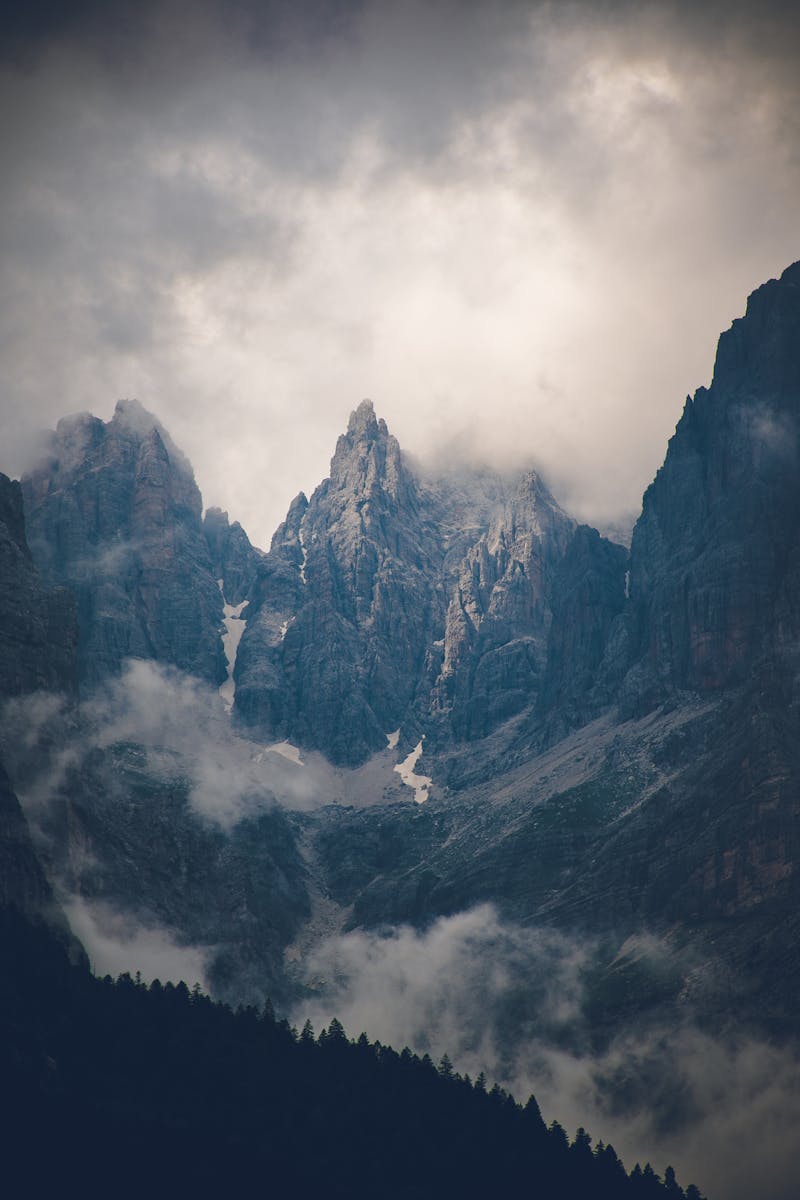
I've been obsessed with cold cases for about twelve years now. Missing persons. Unsolved murders. Government cover-ups. I've read thousands of pages of court transcripts, FOIA releases, and autopsy reports.
But nothing — nothing — has haunted me like the Dyatlov Pass incident.
And last month, I finally found the thing that made everything click.
I'm going to walk you through it. All of it. The official story, the contradictions, and the piece of evidence that the Russian government has been sitting on for over sixty years.
Grab a drink. This is going to take a while.
The "Official Story" — Nine Hikers, One Mountain, Zero Survivors
February 1959. The northern Ural Mountains, Soviet Union. A group of nine experienced hikers — seven men, two women — set out on a skiing expedition to Otorten, a remote peak in what is now the Sverdlovsk Oblast.
Their leader was Igor Dyatlov, 23, an engineering student at the Ural Polytechnic Institute. The group was experienced. Most of them had Grade II hiking certifications, which in the Soviet system meant they'd completed multiple difficult routes.
They never made it to Otorten.
On February 26th, a search party found their tent on the slope of Kholat Syakhl — a name that translates from the indigenous Mansi language as "Dead Mountain."
The tent had been ripped open from the inside.
Not unzipped. Not untied. Slashed with a knife, from within, as if they were so desperate to escape that using the entrance wasn't fast enough.
And here's where it gets weird.
The temperature that night was approximately -30°C (-22°F). And the hikers fled into it without shoes. Some were in their underwear. One was wearing a single sock.
You don't do that unless something inside that tent was worse than certain death from exposure.
What the Search Party Found
The first two bodies — Yuri Doroshenko and Yuri Krivonischenko — were found about 1.5 kilometers from the tent, under a large cedar tree, wearing almost nothing. There were signs they'd tried to start a fire. Branches on the cedar were broken up to five meters high, as if someone had frantically climbed it. To look for something. Or to get away from something.
Three more bodies were found between the cedar and the tent, in positions that suggested they were trying to crawl back. Igor Dyatlov was found 300 meters from the tree, frozen, face-up, gripping a branch.
The last four weren't found until May, buried under four meters of snow in a ravine about 75 meters from the cedar.
And this is where the "official story" starts to fall apart completely.
The Injuries That Don't Make Sense
Lyudmila Dubinina had massive chest trauma — her ribs were broken with a force that the original medical examiner compared to a car crash. But there were no external wounds. No bruising on the skin. Just... destroyed ribs, as if something had compressed her chest from both sides simultaneously.
She was also missing her tongue, her eyes, and part of her lips.
Semyon Zolotaryov had similar rib fractures. Nikolai Thibeaux-Brignolle had a massive skull fracture — a depressed fracture, meaning something hit him with enormous force in a very specific spot.
The medical examiner, Boris Vozrozhdenny, stated under oath: "The force required to cause such damage would be extremely high. It could not have been caused by a human being."
Coincidence? Maybe. But then there's the radiation.
The Part They Really Don't Want You to Think About
When Soviet investigators tested the clothing of the victims, several items showed elevated levels of radioactive contamination. Specifically, beta-particle radiation on the clothing of Kolevatov, Dubinina, and Zolotaryov.
The official report acknowledged this finding and then essentially said: "This is probably from their work at nuclear facilities."
Except most of them didn't work at nuclear facilities.
Zolotaryov was a sports instructor. Dubinina was an engineering student. The only one with any connection to nuclear work was Krivonischenko, who'd briefly worked at the Chelyabinsk-40 nuclear plant — better known as Mayak, the site of the 1957 Kyshtym disaster, the third-worst nuclear accident in history.
So why were three people's clothes radioactive?
If you're researching topics like this, protect yourself. Use a VPN — your ISP logs everything, and searches about Soviet nuclear programs tend to flag monitoring systems. I learned that the hard way when my friend Pavel, who runs a Dyatlov research blog from St. Petersburg, had his site mysteriously go offline for three weeks in 2024.
The Soviet Investigation — And What Was Classified
The criminal investigation was led by Lev Ivanov, a young investigator from the Sverdlovsk prosecutor's office. In 1959, he concluded that the hikers died from a "compelling natural force."
That's the official cause of death. "A compelling natural force."
Not an avalanche. Not exposure. Not murder. A "compelling natural force."
What kind of cause of death is that? I've read hundreds of death certificates and autopsy reports. I've never seen that phrase used anywhere else. It's bureaucratic code for: "We know what happened and we're not telling you."
The case files were immediately classified. They remained sealed until the late 1990s, when portions were released. But here's the thing — the released files have pages missing. Specifically, pages from the radiological analysis and from interviews with Mansi indigenous people who lived in the area.
In 1990, Ivanov himself — now retired — gave an interview to a Kazakh newspaper where he said something extraordinary. He stated that he'd seen "flying spheres" reported in the area around the time of the incident, and that he'd been ordered by senior Communist Party officials to close the case and classify it.
"I suspected at the time," he said, "that the deaths were connected to the spheres. But I was told to stop the investigation."
Lev Ivanov died in 2006. He never changed his statement.
The "Orange Spheres" — And Who Else Saw Them
On the night of February 1-2, 1959, multiple independent witnesses reported seeing strange orange spheres moving across the sky above the northern Urals.
These weren't hikers or villagers who might have been confused. Among the witnesses was a group of geology students from the same polytechnic institute, camping roughly 50 kilometers south. They reported a "glowing orb" that moved silently across the sky, hovered, then vanished.
A military weather station 30 kilometers away logged an anomalous atmospheric event at approximately 1:30 AM.
And here's what really got me. I was going through digitized Soviet military archives that were briefly available on a Russian academic portal in 2021 — most have since been taken down, but I saved screenshots — and I found a reference to "Operation URAL-59," a military exercise involving what the document called "high-altitude atmospheric delivery systems."
The document was dated January 28, 1959. Four days before the hikers died.
Now, "high-altitude atmospheric delivery systems" in Soviet military parlance typically refers to parachute-dropped nuclear weapons tests or experimental rocket stages. The Soviets were actively testing R-7 ICBM variants during this period, and the northern Urals were directly under several known test flight corridors from Baikonur.
What if those "orange spheres" weren't aliens at all?
What if they were Soviet military tests gone wrong — and the hikers were in the wrong place at the wrong time?
The Infrasound Theory — And Why It's Not Enough
In 2019, the Russian government reopened the investigation. After two years of "analysis," they announced their conclusion: an avalanche.
The internet collectively rolled its eyes.
There was no evidence of an avalanche. The tent wasn't buried. The footprints leading away from the tent were walking, not running. An avalanche victim doesn't walk away in an orderly line.
Then a paper came out in 2021 in the journal Communications Earth & Environment by Johan Gaume and Alexander Puzrin, proposing a "slab avalanche" model. It was picked up by every major news outlet as the "scientific answer" to Dyatlov Pass.
My buddy Tom, who's a glaciologist at Colorado State, read the paper and called me at 11 PM. "The math works on paper," he said, "but the assumptions are wild. They're modeling a slab release on a 28-degree slope with a 500kg load. That's not what happened. The slope analysis from the original investigation shows 15-18 degrees. You don't get slab avalanches at 15 degrees."
And even if you accept the avalanche theory — which I don't — it doesn't explain:
- The radiation on the clothing
- The missing tongue and eyes
- The "car crash" force injuries without external wounds
- The orange spheres
- The classified files
- The military exercises in the area
- "Compelling natural force" as a cause of death
An avalanche explains maybe 20% of the evidence. The other 80% just gets ignored.
Semyon Zolotaryov — The Man Who Didn't Belong
This is the rabbit hole that keeps me up at night.
Semyon Zolotaryov was 38 years old — significantly older than the rest of the group, who were all in their early twenties. He wasn't part of their social circle. He joined the expedition at the last minute, reportedly after meeting someone at a holiday party.
His official biography says he was a WWII veteran and sports instructor. Standard stuff.
Except.
When his body was found, he was wearing two watches. One set to local time. One set to Moscow time. Sports instructors from the Urals don't typically need Moscow time.
He was carrying a camera that was found with exposed film — film that has never been publicly released. The Russian government acknowledges the camera exists. They won't release the photos.
His military service records contain inconsistencies. Dates that don't line up. Units that were known covers for NKVD/KGB operations. A "wound" that doesn't match any known engagement his listed unit participated in.
In 2018, journalist Alexei Rakitin published research suggesting that Zolotaryov was a KGB agent placed within the hiking group as part of a controlled delivery operation — possibly meeting foreign intelligence contacts in the wilderness, using the hiking expedition as cover.
If that's true, then the entire Dyatlov Pass incident might not be about what killed them. It might be about why Zolotaryov was there in the first place.
The Mansi Connection
The Mansi people — indigenous to the Ural Mountains — were initially suspects. Soviet investigators questioned them extensively, then cleared them.
But the Mansi interviews — most of which remain classified — apparently contained references to the area around Kholat Syakhl being spiritually forbidden. The mountain's name, "Dead Mountain," wasn't just colorful nomenclature. The Mansi considered it a place of genuine danger.
They reportedly told investigators about lights they'd seen on the mountain for years. Not campfires. Not aurora. Moving lights that appeared and vanished.
One elder apparently said something to the effect of: "Your people test things there. We stay away."
That quote — if it's real — suggests the Mansi knew the Soviet military was using the area for something. And they knew it was dangerous enough to avoid entirely.
What I Think Actually Happened
No. I'm not going to tell you what I think happened. That's not how this works.
What I will tell you is this: the Russian government has had sixty-seven years to produce a coherent explanation. They've given us "compelling natural force," a transparently bad avalanche theory, and classified files that they refuse to open.
I will tell you that Soviet military tests were happening in the area. That the clothing was radioactive. That the injuries were impossible from natural causes. That a possible KGB agent was embedded in the group. That indigenous people knew the mountain was being used for something.
And I will tell you that in 2024, a Russian academic submitted a formal request to the FSB (the KGB's successor) for the complete, unredacted case files. The request was denied under Article 7 of the Russian State Secrets Act — the same article used to protect active military programs.
Active military programs. For a case from 1959.
Before you go deeper down this rabbit hole, make sure you're browsing privately. The Dyatlov research community has had some... interesting experiences with their online activity being monitored. A VPN isn't paranoia anymore. It's common sense.
What killed those nine hikers on Dead Mountain?
I don't know. But someone does. And after sixty-seven years, they still won't tell us.
Drop your theory in the comments. I've read every major hypothesis — the military test theory, the KGB operation theory, the infrasound theory, the Mansi ritual theory, even the yeti theory (which is less crazy than you'd think once you see the footprint analysis). Tell me what you think happened.
And if you have access to Russian-language sources I might have missed — especially anything from the Yekaterinburg archives — please reach out.
I'll be doing a Part 2 on the camera film that was never released. Stay tuned.
UPDATE (March 2026): A reader sent me a link to a Russian Telegram channel that claims to have scanned pages from the classified Mansi interviews. I'm working on verifying them. If they're real, this changes everything. More soon.
Related Rabbit Holes
- 🔗 The Baltic Sea Anomaly Was Found 14 Years Ago — Why Has Every Government Refused to Go Back?
- 🔗 A Nuclear Air Force Base Just Went Into Lockdown Over a "Mystery Drone"
- 🔗 The CIA Paid People to See Through Walls for 23 Years (Declassified Pages)
- 🔗 Göbekli Tepe Was Deliberately Buried 10,000 Years Ago (Erased Timeline)
Share this before it gets taken down. You know the drill.
This site explores theories, declassified documents, and unexplained events. We present evidence and let you form your own conclusions. For entertainment and educational purposes.
Comments
Post a Comment